THE ANATOMY OF A $5K–$8K SOFA
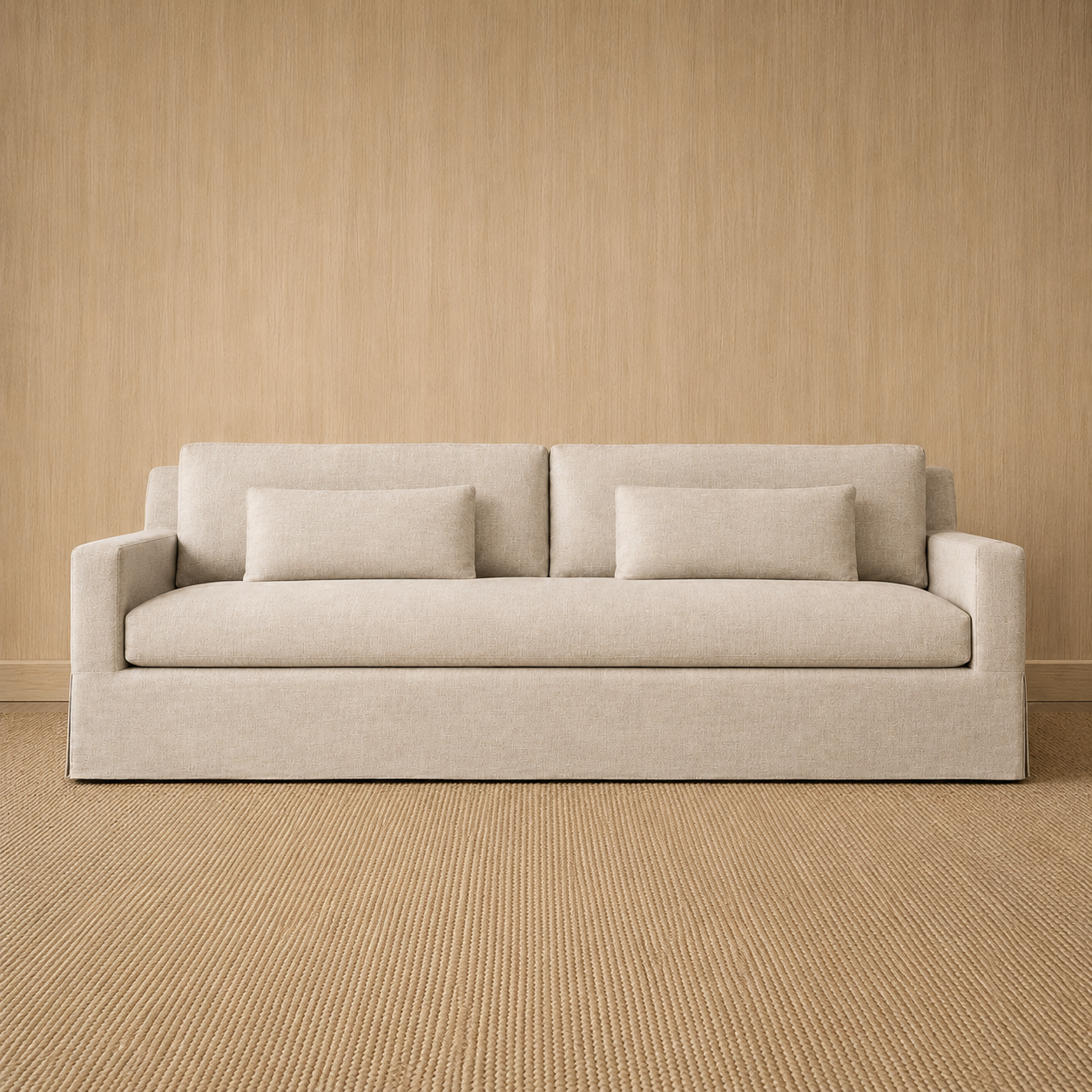
The Belgian Slipcovered Track Arm Bench-Cushion Sofa, $5,500–$7,200, is the specimen. It's built the traditional way — kiln-dried hardwood, eight-way hand-tied springs, down-wrapped foam, linen slipcover. Five layers, stacked. Pull any one out and the sit collapses.
These five layers are five of the ten categories in The Call Standard — the system I grade every sofa against. Twenty-five years and forty-one million dollars of specified furniture taught me which layers manufacturers cut to save cost. This is what I used to tell paying clients. Now it's the page.
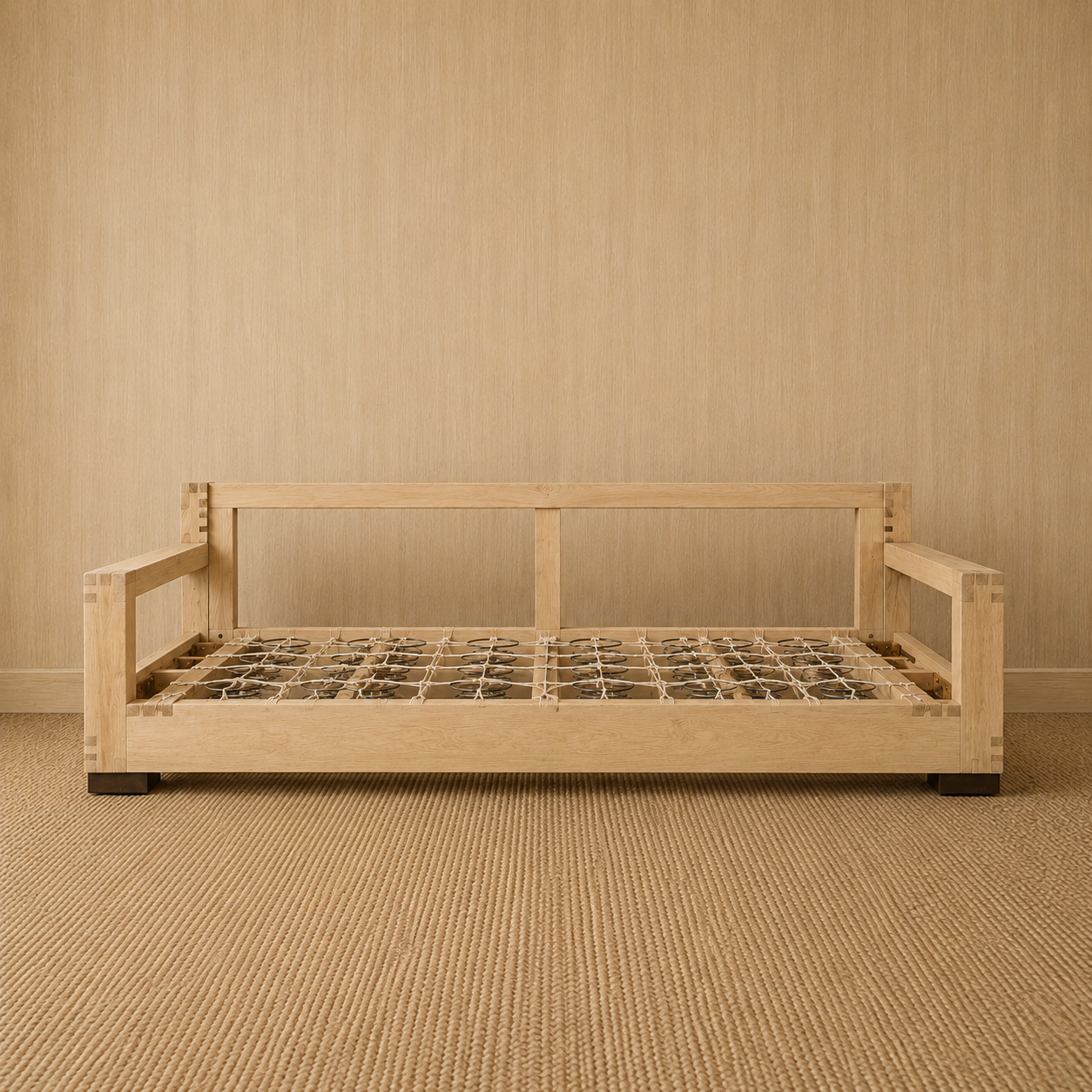
1 — THE FRAME
The bones. Kiln-dried hardwood, joined at the corners with mortise-and-tenon, glued and pinned, reinforced with corner blocks. The good frames use oak, ash, or maple — the three species that hold a screw and resist denting. Poplar shows up in cheaper construction; it's classed as a hardwood botanically but is soft, dents under pressure, and doesn't hold the joint. Acceptable for hidden interior blocks, not for the structural perimeter.
Kiln-drying means the wood was baked down to 6–8% moisture content before it was cut. Skip this step and the frame moves as it dries in the room — joints loosen, panels split, the sofa develops a creak. The good frames don't move.
What good looks like: hardwood named by species, joinery glued and pinned (not stapled), corner blocks at every load point, moisture content under 8%.
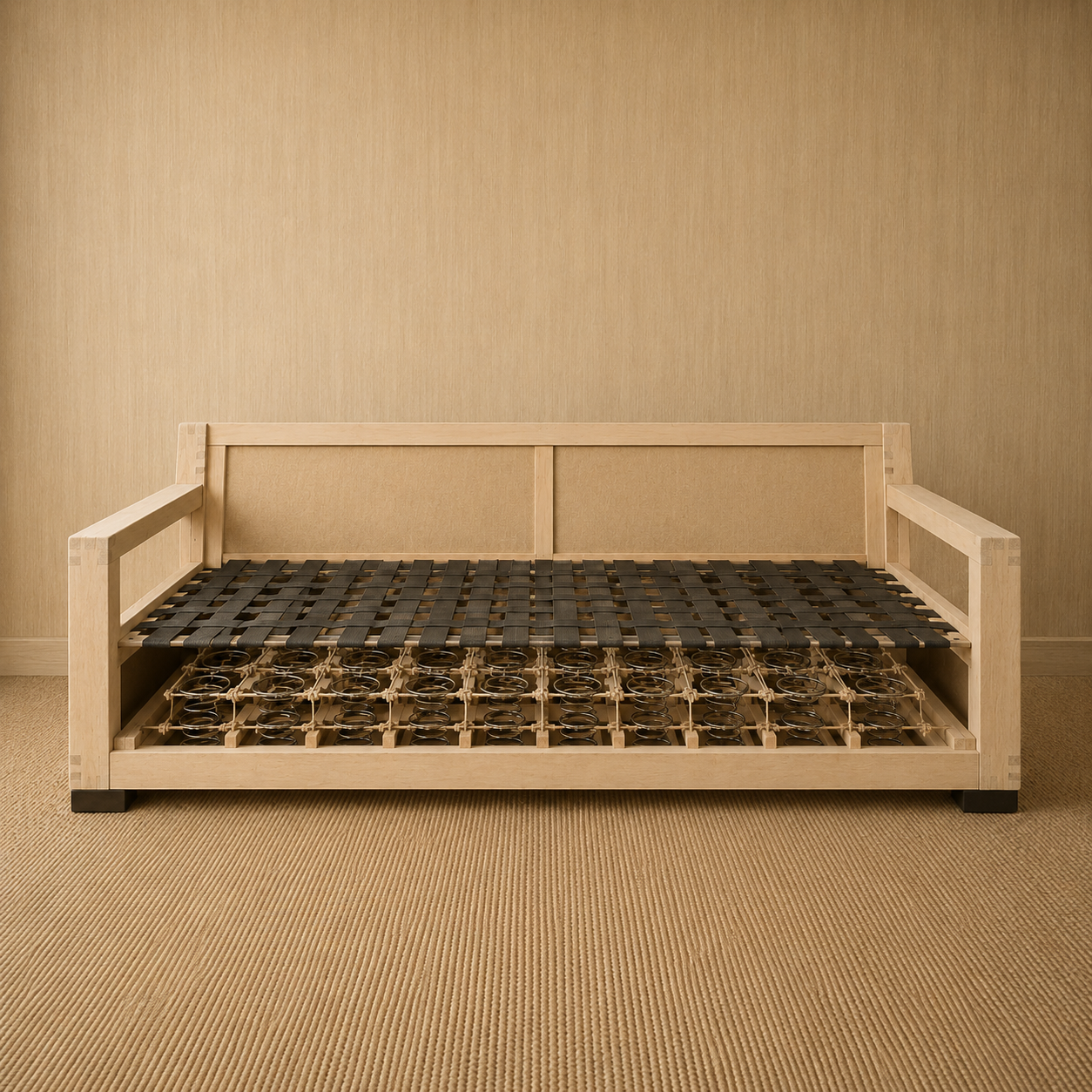
2 — THE SUSPENSION
What you actually sit on. Two layers in a well-built sofa: eight-way hand-tied coil springs below, woven webbing across the deck above. Coils give the flex and recovery. Webbing platforms the cushion so it doesn't sag through the springs over the years. RH uses both. Most sofas at this price use one or the other.
Eight-way means each coil is tied to its neighbors in eight directions — front, back, sides, four diagonals — so the seat compresses evenly and springs back as a unit. Sinuous springs (the zigzag wire under most retail sofas) are cheaper, lighter, noisier, and shorter-lived. Coils are the upholstery tradition for a reason.
What good looks like: coils plus webbing, not coils or webbing. Jute or rubberized webbing across the deck. Wire gauge in the low double digits — lower number is thicker steel, longer life.
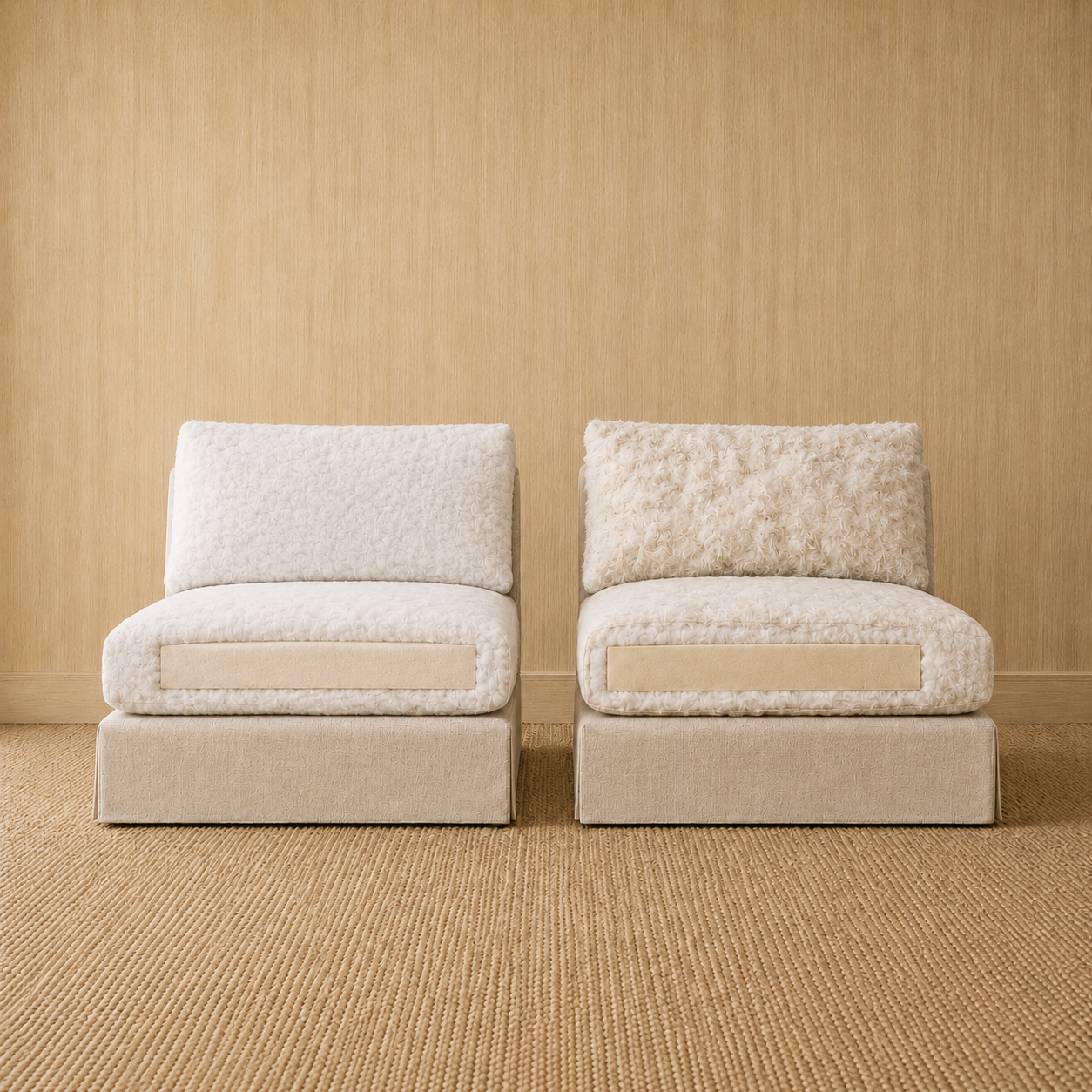
3 — THE CUSHION FILL
What touches you. Three options on most sofas: solid foam, down blend, or down-wrapped foam. RH offers the last two. Order the down-wrapped foam.
A down-wrapped foam cushion is a high-density foam core inside a baffled down envelope. The foam holds the shape — no body-print after a year, no center sag, no daily karate-chop to reset the corners. The down gives the soft top-feel of a fully down cushion without the shed, the smell, or the maintenance.
Pure down is romantic and high-maintenance. Feathers migrate, quills work through cheap ticking, the cushion flattens by Thursday and has to be punched back into shape. If you do want a fully down cushion, the one detail that decides whether you'll regret it is the ticking — a tightly woven cambric or downproof cotton shell that keeps the feathers in. Without it, the dust is guaranteed.
What good looks like: foam density at 1.8 lb minimum, 2.0+ ideal. Down-to-feather ratio favoring down. Down-proof ticking if the cushion is mostly down.
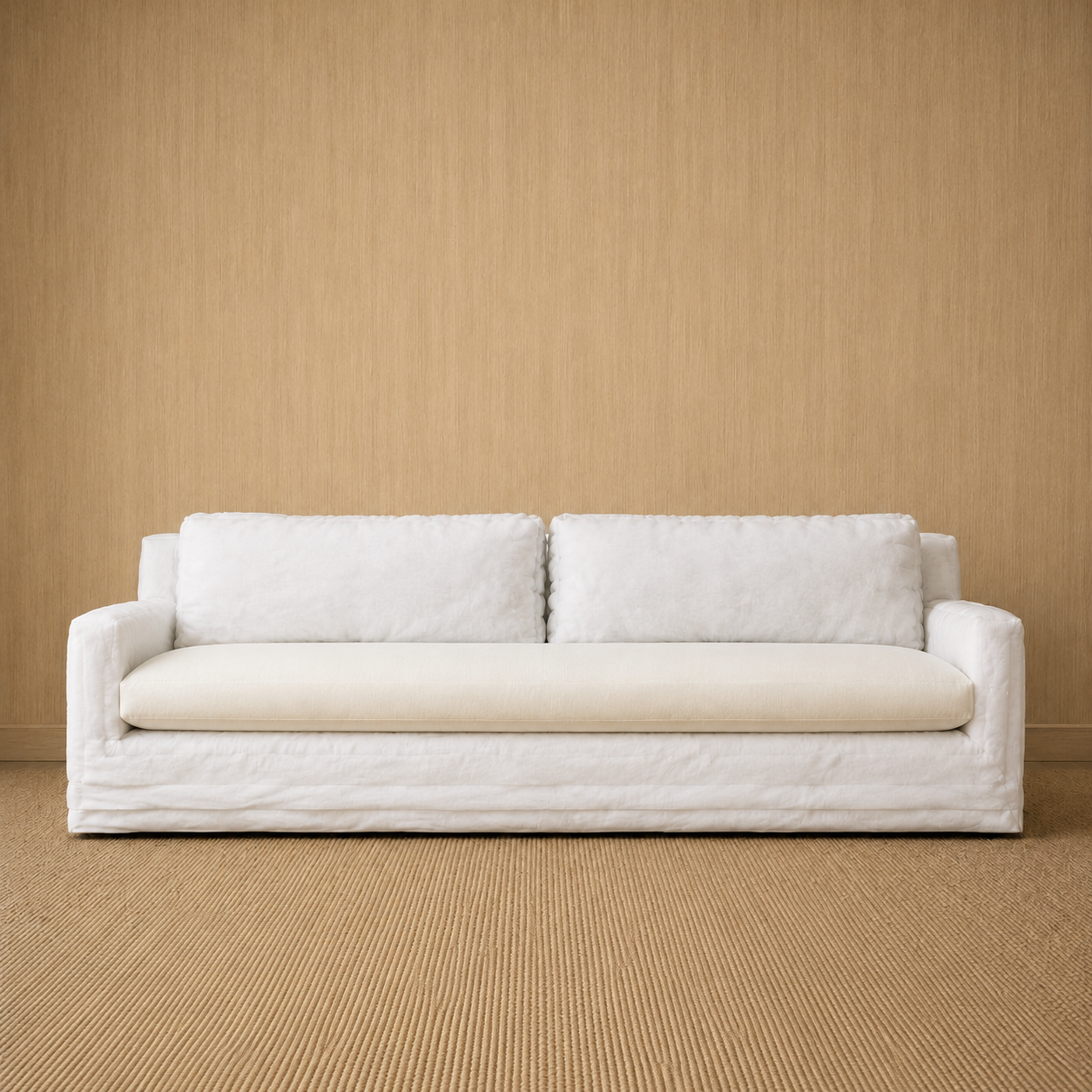
4 — THE INNER UPHOLSTERY
The layer between the frame and the cover. Batting wrapped over the arms, back, and deck. Inner muslin sewn underneath. This is the part that decides whether your elbow lands on cushion or on wood.
It's also the layer manufacturers cut to save cost. Cheap sofas use a single thin pass of polyester batting and call it done. A well-built sofa layers cotton, wool, or blended batting over a polyester base, then sews the muslin in place — staples pop through within a year and you feel every one of them. Press hard on the arm of any sofa you're considering. If you feel the frame, the inner upholstery is thin.
What good looks like: arms and back that absorb pressure without telegraphing the frame. Sewn muslin, not stapled. Natural-fiber batting in the outer layers.
5 — THE COVER
The face. On the RH Belgian, a tailored linen slipcover — cut oversize, washed for softness, fitted with welted seams and ties underneath. The cover is the layer everyone judges and the layer that's easiest to replace.
Three things to read it by. Tailoring — straight seams, crisp corners, welt cord aligned to the frame edge. Fabric weight — upholstery linen runs 12–16 oz per yard; lighter than that and it pills and pulls. Fit — loose enough to slip off and wash, tight enough that it doesn't slouch when you stand up.
Slipcovered sofas have one quiet advantage. Re-stuffing the cushions at year five or six is a $40 fix instead of a reupholstery job. Pop the cover, open the cushion zipper, add a layer of down, zip it shut. The sofa resets.
What good looks like: heavy linen or performance weave, welted seams, ties or hooks underneath, generous seam allowances so the cover can be re-fitted if anything shifts.
THE POINT
A sofa is a stack of decisions. Frame, suspension, fill, inner upholstery, cover. Each layer leans on the one below it. At $5K–$8K, you should be paying for all five, done right. The RH Belgian Track Arm gets the structure correct — the kind of stack a private client would have paid me to specify. If a sofa at this price goes quiet on any one of the five layers, you're being charged for the slipcover.
Next in the series: INSIDE A $2K–$5K SOFA.
NOTE: Unsponsored. RH does not offer affiliate commissions; this is independent analysis.