FOUNDERS LETTER
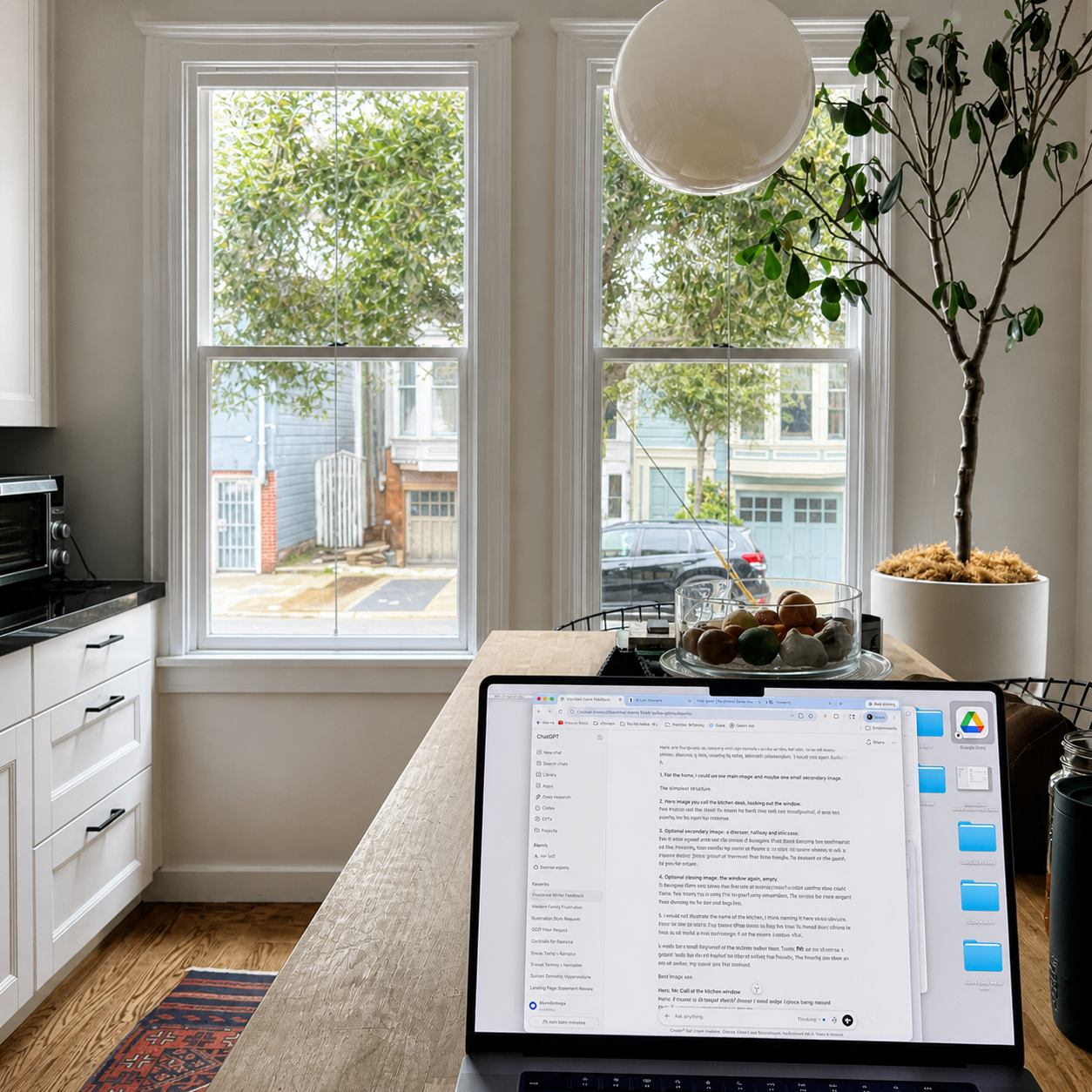
I am at my desk in San Francisco. The one in the kitchen, in front of the window.
A handsome man — dressed in that Japanese city-boy way I am always trying to pull off and never quite can — is trying to move a dresser out of the back seat of his car and carry it into his house. His daughter, maybe two, in a pink dress with bows in her hair, is standing on the sidewalk. He tells her not to move as he angles the dresser out.
I want to go help. But by the time I get there, the scene will have ended.
It makes me think differently about furniture.
Here I am at my desk, trying to come up with some awfully complex and mechanical way of saying something simple: I want to help. None of the versions work. Just like the man on the street, there is distance — a plate of glass — separating me from the thing I am trying to do. I hope this website is the hand extended through the glass.
Personal experience. Hard-won knowledge. A glimpse into the life I have led over the past twenty-five years working in interior design. I have spent those years helping people with extraordinary resources answer the same question almost everyone faces at one point or another: What in God’s name am I going to do with this room?
When you have money, the answer is easier. You hire the best people. They bring their experience, their eye, their sources, and the problems go away. For a price. Everyone else is left to figure it out piece by piece.
That is what I call the mistake ladder. Not because the mistakes are worthless. They are the rungs. You buy the wrong thing, live with it, understand why it is wrong, and come away knowing yourself a little better. Then you buy the next thing. Then the next. Slowly, preference becomes taste.
The problem is that it is a cash-fueled journey. Taste is often acquired before the money to fully express it arrives — or worse, just after the money has already been spent. So your house becomes a kind of record. The almost-right sofa. The too-small rug. The table you bought because it was on sale. The chair you inherited and never quite loved, but never quite got rid of. The lamp that seemed like a good idea at the time.
None of it is meaningless. It all taught you something.But it was expensive. Not just in money, but in the years spent living with the almost-right thing.
There has always been another path, but until now it has mostly belonged to people who could afford to hire their way out. They got a consultant. The eye. The sources. The band of merry elves. The person who had already made, seen, or fixed the mistake before.
But I do not think good taste should require a private education. Most designers tell you what to buy. I want to show you how to decide. What matters. Where to look. What to skip. When to spend. When to walk away.
Not in some grand, precious, intimidating way. More like a friend who has helped make the images people still save to Pinterest, worked behind the scenes on the TV shows you used to watch, and spent enough time in showrooms, workrooms, makers’ studios, and antique-store basements to say what is worth buying and what is not.
I look up from my desk. The handsome man has wrestled the dresser through his front door. His daughter is still on the sidewalk. He runs down, scoops her up, kisses her, and carries her inside.
The door closes. The street barely remembers the events. But it sticks with me.
Furniture is personal. It is how a room slowly becomes a life. It is how we make a home. It is how we make a family.
This is an invitation to join me on the hunt. I will help you shop better, spend better, and trust yourself more along the way.
I will help you get over the mistake ladder.
Let’s begin.